
22K vs 24K Gold: What’s the Difference and Which One Should You Buy?
Published:
Last updated:
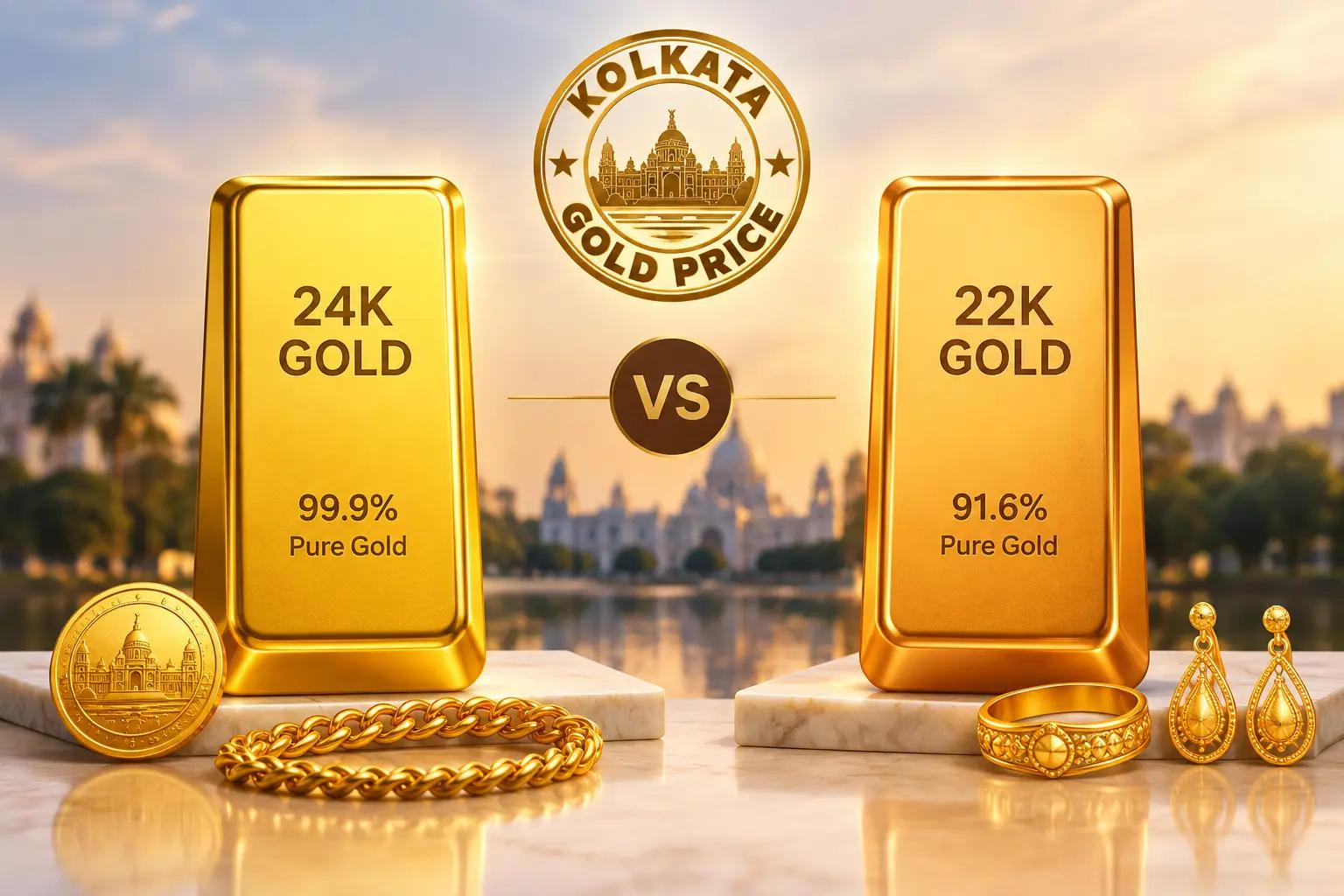
A guide from Kolkata Gold Price
Gold is more than jewellery in India. We buy it for weddings, festivals, gifts and investment. But when buying gold, one question comes up often: Should you buy 22K or 24K gold?
The simple answer is: 22K is generally better for jewellery, while 24K is better for pure-gold investment.
What is 22K Gold?
22K means 22 parts out of 24 are gold. Its minimum gold purity is 91.6%, which is why you often see 22K916 written on gold jewellery in India.
The remaining portion usually contains metals such as copper or silver, which make the jewellery stronger. According to the Bureau of Indian Standards (BIS), 22K916 is an approved fineness grade for gold jewellery in India.
Because 22K is stronger than very pure gold, it is widely used for gold chains, bangles, necklaces, earrings and traditional wedding jewellery. For most Indian jewellery buyers, 22K is the practical choice.
What is 24K Gold?
24K is the highest-purity form of gold. BIS defines 24KF fine gold as 999 parts per thousand or higher, meaning at least 99.9% gold. BIS also recognises 24KS standard gold at a minimum fineness of 995.
Because pure gold is soft, 24K is usually not the best choice for jewellery that you wear every day. Instead, it is commonly used for gold bars, gold coins and investment gold.
How Much Difference Does Purity Make?
Imagine the market price of 24K gold is ₹1,00,000 per 10 grams.
22K gold value = ₹1,00,000 × 91.6% = about ₹91,600
So, before making charges, GST and other costs, the difference would be about ₹8,400 per 10 grams in this example.
This is why you should not compare the price of 22K and 24K gold without first checking the purity.
Indians Are Still Buying Huge Amounts of Gold
According to the World Gold Council, India consumed around 430.5 tonnes of gold jewellery in 2025. Although this was 24% lower than 2024 because of sharply higher gold prices, Indians still spent a record US$49 billion on gold jewellery during the year.
In Q2 2026, total Indian gold demand was about 131 tonnes, while jewellery demand was around 75 tonnes. India accounted for about 27% of global jewellery demand during the quarter.
India's bar and coin demand also reached 113 tonnes in the first half of 2026, its highest H1 level in 13 years.
Always Check the Hallmark
Whether you are buying 22K or another purity, checking the BIS hallmark is important.
A current gold jewellery hallmark includes the BIS logo, purity mark and a six-digit HUID code. You can verify the HUID through the BIS CARE app.
As of March 2026, mandatory gold hallmarking had expanded to 380 districts in India, and more than 60 crore gold items had been hallmarked with HUID since July 2021.
If you are buying 22K jewellery, look for 22K916 and verify its HUID before completing the purchase.
So, Should You Buy 22K or 24K?
Choose 22K gold if you are buying jewellery, especially jewellery for weddings, festivals or regular use. You get high gold purity while still having enough strength for practical wear.
Choose 24K gold if your main goal is investment and you are buying coins or bars. You receive more pure gold for the same weight.
For jewellery: 22K makes more sense.
For pure-gold investment: 24K makes more sense.
The most important thing is to check the purity, BIS hallmark, HUID, weight, making charges and final bill before you buy.
| Feature | 22K Gold | 24K Gold |
|---|---|---|
| Gold purity | 91.6% | Around 99.9% for fine gold |
| Common marking | 22K916 | 999 / 995 depending on product |
| Strength | Stronger | Softer |
| Best for | Jewellery | Coins and bars |
| Daily wear | Better | Usually not recommended |
| Gold value per gram | Lower | Higher |
| Investment purity | Good | Better |